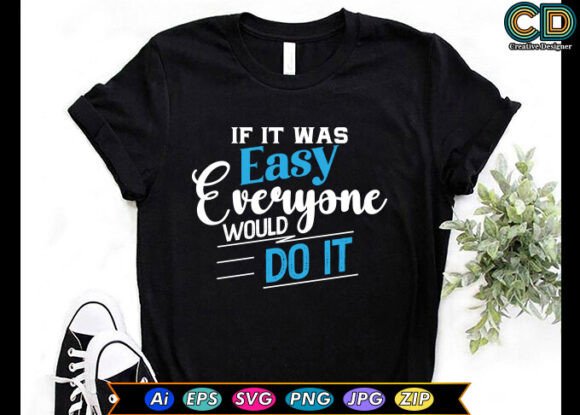
If It Was Easy Everyone Would Do It
As a designer who’s worked with countless machine embroidery designs, I always start by asking: does this design feel like it was made for real use, or is it just another generic graphic? If It Was Easy Everyone Would Do It falls into the former category. It’s a bold statement, both in message and execution, and that makes it ideal for a range of handmade and commercial projects.
The First Impression
When I first saw If It Was Easy Everyone Would Do It, I noticed its clean, modern layout and strong visual presence. The text is straightforward but carries weight. It doesn’t try to be anything other than what it is: a statement piece. The shape and theme are versatile enough to work on a variety of items, from custom apparel to personalized gifts. It has a confident, almost defiant tone that could resonate well with customers looking for something meaningful in their handmade products.
The design’s detail level is moderate—enough to stand out without being overwhelming. That makes it suitable for a wide range of embroidery machines and project types. Whether you’re working on a simple tote bag or a more complex embroidered patch, the design holds up without needing excessive embellishment.
Real-World Embroidery Performance
I tested If It Was Easy Everyone Would Do It on several fabrics and found it performs well across different surfaces. On a standard cotton tote bag, the design looked sharp and clear. The stitch density wasn’t too heavy, which helped prevent puckering or distortion. For a sweatshirt, the design sat nicely on the fabric without looking cramped or stretched.
On baby clothes, the design’s simplicity was a plus. It didn’t overwhelm the small size of the garment, and the font choice was easy to read. For holiday gifts or personalized items, the design added a thoughtful touch that felt authentic rather than mass-produced.
One thing to note is that If It Was Easy Everyone Would Do It works best on flat, stable surfaces. It might not be the best choice for curved areas like caps or hats, where the text could stretch or distort. Similarly, on textured or stretchy fabrics, the design may not sit as smoothly as it would on a smooth, non-stretch material.
Where to Use It Carefully
While If It Was Easy Everyone Would Do It is a strong design, there are situations where it needs extra attention. Small hoop sizes can make it difficult to stitch the entire design without re-hooping, which can affect consistency. Thin or dark fabrics may require additional stabilizer to prevent the stitches from showing through or bleeding.
Dense stitch areas could cause the design to look too heavy, especially on lightweight materials. If you're using it on a layered garment or something that will be washed frequently, you’ll want to ensure the stitching is secure and won’t fray over time.
For intricate corners or tiny lettering, the design may need some tweaking to ensure clarity. It’s also worth testing it in black and white mockups to see how it looks without color. This can help you decide if it fits your brand or product aesthetic before committing to a final version.
Impact on Visual Appeal and Value
If It Was Easy Everyone Would Do It adds a unique visual element to any project. Its boldness makes it stand out in a crowded market, whether you’re selling on Etsy or at a craft fair. It’s a great way to elevate a basic item into something that feels personal and intentional.
From a customer perspective, the design conveys a sense of authenticity. People often appreciate when a product has a story or message behind it, and this design does that without being overly complicated. It’s also highly recognizable, which can help with brand consistency and recall.
For small business owners, this design can be a valuable addition to your inventory. It’s versatile enough to work on multiple product types, and its simplicity means it can be adapted to different styles and themes. Whether you’re making custom apparel, embroidered patches, or holiday gifts, If It Was Easy Everyone Would Do It offers a solid foundation for creative expression.
Practical Designer Notes
Before using If It Was Easy Everyone Would Do It in a project, I recommend doing a few quick tests. Start by stitching it on scrap fabric to check how the stitches lay and if the design looks as expected. Pay attention to thread color contrast—some colors may not show up well on certain fabrics.
Review the stitch density to make sure it’s appropriate for your project. If the design is too dense, it may cause issues on delicate or thin materials. Confirm the hoop size required to stitch the entire design in one go. If not, plan for multiple hooping steps to maintain consistency.
Inspect small details, especially around the edges of the text. Make sure they’re crisp and well-defined. Test the design on both light and dark backgrounds to see how it looks in different contexts. Use the right stabilizer for your fabric type to prevent shifting or distortion.
Finally, check if the design is suitable for both personal and commercial use. Since the file formats include editable AI, SVG, and EPS, it should be easy to modify or scale as needed. But always confirm the licensing terms before selling finished items or digital products.
Conclusion
If It Was Easy Everyone Would Do It is a design that speaks for itself. It’s practical, adaptable, and visually striking—perfect for a wide range of embroidery projects. Whether you’re an Etsy seller, a small shop owner, or a hobbyist looking to add value to your handmade products, this design offers a strong foundation for creativity and expression.